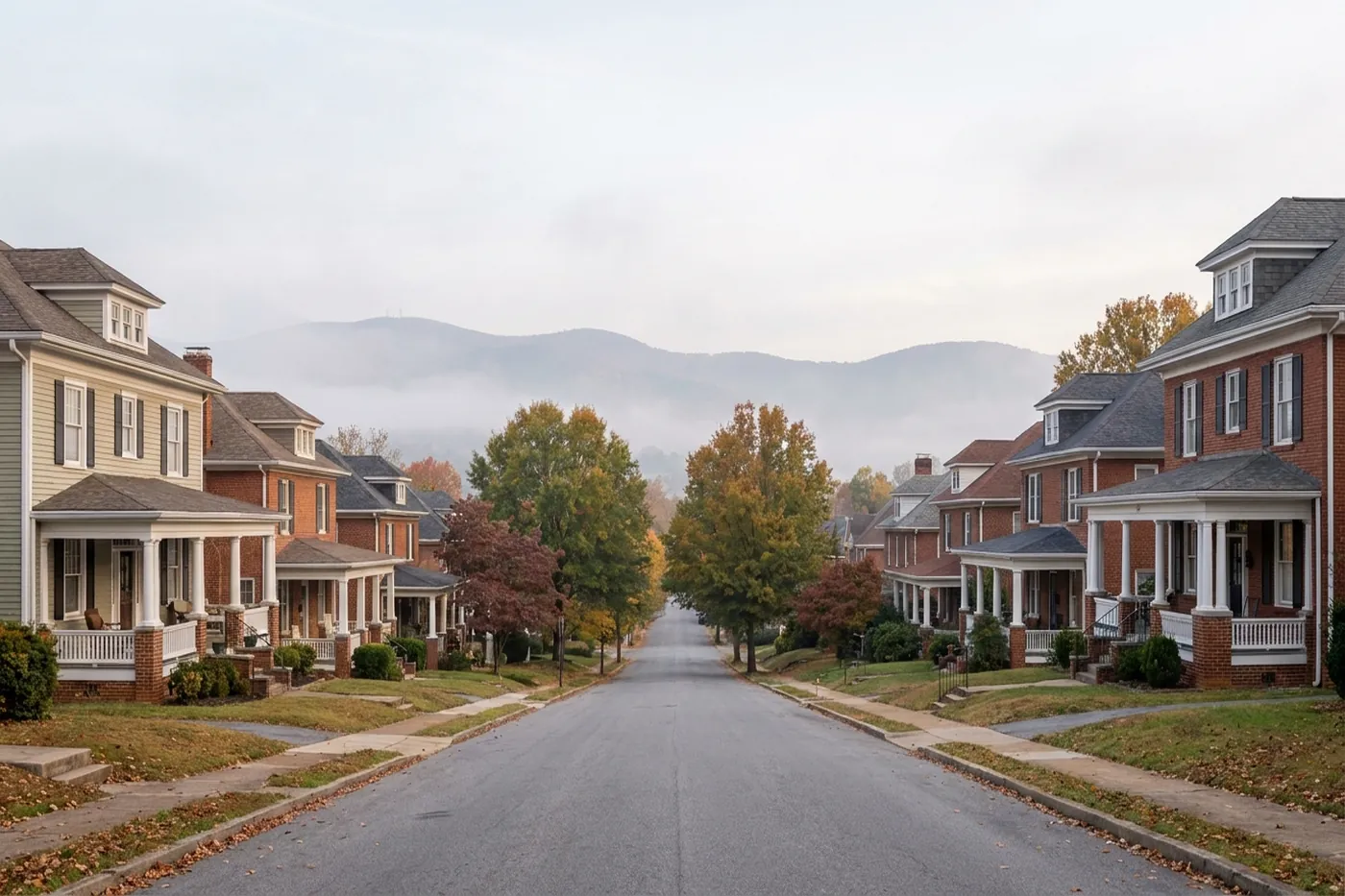
Crawl space encapsulation in Roanoke costs $6,000–$15,000 for the complete sealed system. In a valley catching roughly 42 inches of precipitation a year between two mountain ranges, the encapsulation that lasts is the one whose water plan came first.
The three-front problem, the build in valley order, and what places your crawl in the range.
Three fronts, one sequence
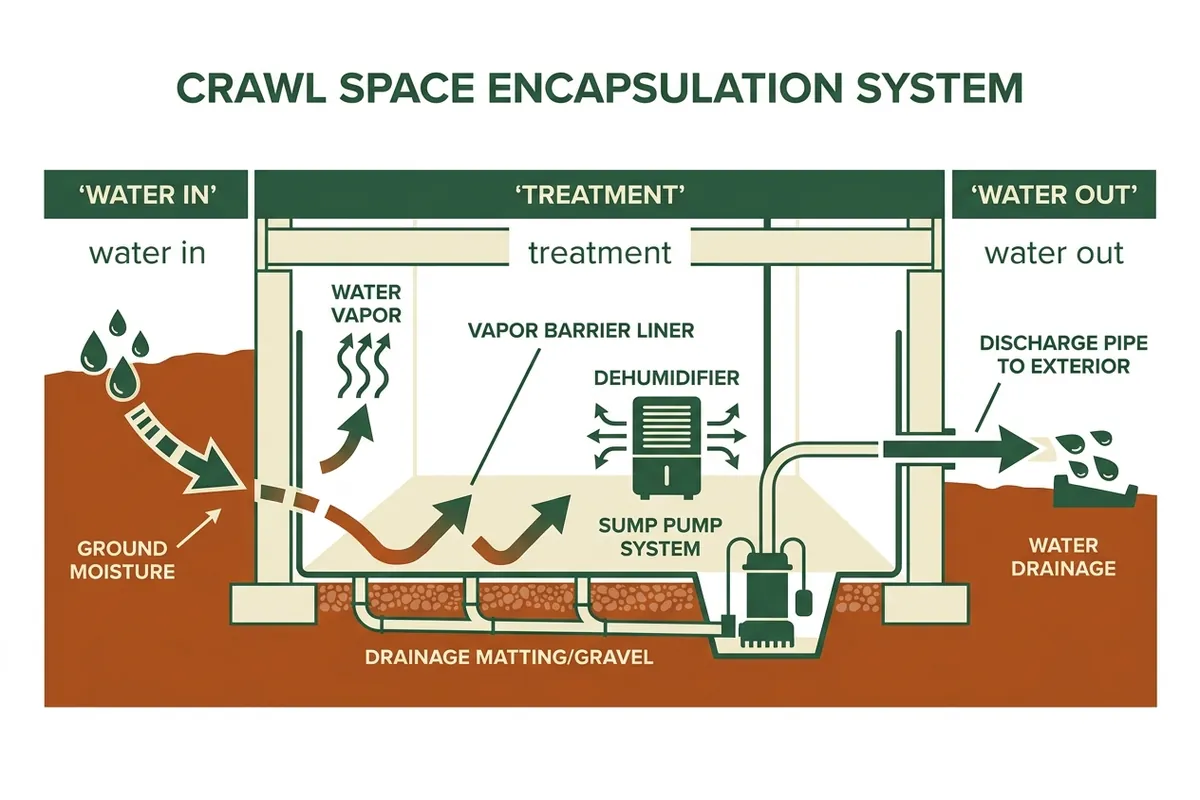
Valley crawls get wet three ways: runoff arriving from higher ground, groundwater surfacing as seeps through the limestone floor, and humid summer air condensing inside vented crawls. A liner addresses none of those by itself — which is why our sequence never varies. Intercept and discharge the liquid water. Repair what the years of dampness softened. Seal ground and walls airtight. Then dry the enclosed air mechanically and prove it with readings. Skip a stage and the valley finds the gap; run them in order and the crawl stays dry through every season the Blue Ridge sends.
The build, stage by stage
- Inspection with photos — moisture readings, framing check, and the water path walked outside
- Water management — interception at uphill walls, seep collection, sump and discharge as the lot dictates
- Remediation — mold treated, softened framing repaired, nothing sealed over
- The seal — reinforced liner fastened and taped across ground, walls, and piers; vents closed; penetrations sealed
- The dry — crawl-rated dehumidifier sized to the volume, draining automatically
- Commissioning — humidity verified, photo set delivered
What moves the number
| Driver | Effect |
|---|---|
| Liquid water present | Adds the interception/collection stage — the big variable |
| Square footage and clearance | Liner area and working pace |
| Framing condition | Railroad-era homes often carry repair lines |
| Slope logistics | Access and discharge routing on hillside lots |
| Dehumidifier sizing | Matched to volume and load |
Quotes are written, itemized by stage, and honored as written — with your crawl's readings attached.
Frequently asked questions
What makes a valley encapsulation different from a flatland one?
The water plan comes first and works harder: slope interception, seep collection, and discharge routing get engineered before any liner is unrolled. The sealed system itself is the same proven design Virginia's code recognizes — the valley just demands stage one be done seriously.
Where does my crawl land in the $6,000-$15,000 range?
Water tells. Dry crawls with clean framing price at the bottom; crawls taking slope runoff or seasonal seeps carry a water-management stage worth $2,000-$5,000; softened sills add repair lines. The photographed inspection places yours with evidence.
Can pier-crawl railroad-era houses be sealed?
Yes — Old Southwest and Grandin-era pier crawls seal well, each pier wrapped into the liner. A century of vented humidity means framing gets inspected and repaired first, which the photos document.
Do the vents stay or go?
They close — that's the design, and Virginia's code explicitly permits it with a Class I vapor barrier and mechanical drying installed. Vented crawls are how valley humidity got in to begin with.
How fast does the house change after sealing?
The musty smell usually fades within days as the crawl dries; summer comfort upstairs follows the first hot spell; and the readings we take at commissioning give you the before-and-after in numbers.
Get a free Roanoke crawl space inspection
Tell us what you're noticing — smells, humidity, floor bounce, a wet crawl — and we'll schedule an inspection with photos of what we find. We reply the same business day.